


The Overlooked Edge in Climate Investing
In recent years, as investors increased their focus towards climate solutions, some of the founders working closest to climate vulnerability have found themselves among the least funded. Women-led climate enterprises are the clearest examples of this gap.
For impact funds and foundations, the bigger opportunity may lie in recognizing how much high-potential climate innovation still sits outside mainstream capital flows.
Across emerging markets, women entrepreneurs are building climate solutions that are directly meant for local economies – whether in sustainable agriculture, waste management, clean energy access, or circular business models. Yet, they continue to receive a disproportionately small share of capital.
According to research, women-led businesses receive less than 3% of venture capital globally, despite representing a far larger share of entrepreneurial activity. The result is a persistent gap between where capital flows and where impact is actually being created.
A Structural Gap, not a Pipeline Problem
Investors often describe the problem as a lack of pipeline. Across South Asia, however, the issue is usually less about founders and more about the systems evaluating them.
Traditional investment frameworks tend to favour patterns that women entrepreneurs are less likely to fit – networks that are already established, sectors that scale in predictable ways, and leadership profiles that mirror existing portfolios. But climate innovation in emerging markets rarely conforms neatly to these expectations. When led by women, these ventures often sit even further outside conventional investment lenses.
This creates a disconnect. Strong, viable enterprises remain underfunded because they are evaluated through frameworks that fail to capture their strengths, not because they lack potential.
Why This Matters More in Emerging Markets
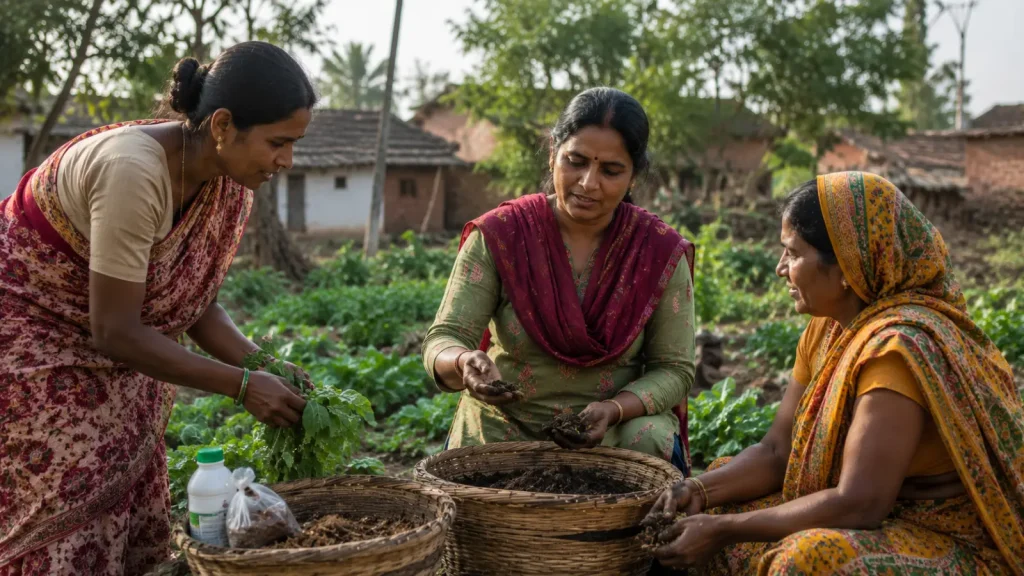
The case for investing in women-led climate enterprises becomes even stronger in emerging markets – and particularly in South Asia.
The region faces some of the world’s most acute climate risks, with countries like India, Bangladesh, and Pakistan consistently ranking among the most vulnerable to climate impacts.
Yet access to capital remains deeply uneven. In India, women founders reportedly receive only around ₹4 for every ₹100 invested in startups, highlighting how significantly women entrepreneurs continue to be underrepresented within investment ecosystems.
At the same time, women comprise nearly 43% of the global agricultural labour force and produce 60-80% of food in developing countries – yet have disproportionately limited access to land, finance, technology, and markets, according to the Food & Agriculture Organization (FAO).
In South Asia, women are often deeply involved in managing natural resources, agricultural livelihoods, and household-level climate adaptation. As a result, many women founders approach climate innovation with a close understanding of how climate risks affect every day economic life.
So, when women build climate solutions in this context, those solutions tend to be based on lived realities – whether improving farm resilience, enabling decentralized clean energy access, or strengthening local supply chains.
In parts of rural India, women-led enterprises are already experimenting with climate-resilient farming models, bio-inputs, decentralized solar applications, and waste-to-value systems tailored to local supply chains. This proximity to the problem often translates into businesses that are more adaptive, more inclusive, and more likely to achieve sustained adoption.
For investors exploring emerging market climate opportunities, this closeness to the problem can become a meaningful advantage, yet it still receives far less attention than it deserves.
Why Investors Are Beginning to Pay Attention
The conversation around gender-lens investing has grown and evolved significantly in recent years. Gender-lens investing is increasingly being discussed not only as a social imperative, but also as a serious investment strategy.
A study by Boston Consulting Group found that startups founded or co-founded by women generated significantly higher revenue per dollar invested compared to their male counterparts. Research supported by UN Women further highlights that women-led enterprises often demonstrate stronger capital efficiency and deeper community-level impact.
In climate sectors – where success depends on behavioural change, trust, and long-term adoption – these characteristics are central to scalability. For many investors, this is changing the way gender-lens investing is evaluated within portfolio strategy.
Real Constraint: The Missing Middle
Despite this potential, many women-led climate enterprises struggle to grow. Many of these ventures are able to demonstrate strong early traction. What they often lack is access to patient capital, strategic guidance, and follow-on support.
Globally, the financing gap for women-owned small and medium enterprises is estimated at over $1.7 trillion, according to the World Bank. In climate sectors within emerging markets, this gap is even more pronounced.
Too early for institutional investors and too complex for traditional grant mechanisms, these women-led climate ventures often fall into the “missing middle”. They require patient capital, strategic guidance, and access to networks that can help them navigate regulatory, technical, and market challenges.
Ironically, many women-led climate ventures are solving exactly the kind of adaptation challenges that large climate funds say they want to support – resilient agriculture, decentralized systems, and community-level climate resilience – yet these same ventures often struggle to pass conventional investment filters.
In several early-stage climate cohorts in South Asia, for instance Project SAFFAL, promising women-led ventures working on areas such as climate-resilient agriculture and decentralized energy solutions have demonstrated strong pilot outcomes but struggled to access follow-on capital – highlighting how systemic this gap remains.
Rethinking Risk in Climate Investing
For many impact funds, hesitation around investing in women-led climate enterprises is often framed in terms of risk. What is frequently labelled as risk is, in many cases, unfamiliarity – limited exposure to startup pipelines, insufficient local context, or the absence of intermediaries who can bridge the gap between early-stage innovation and institutional capital.
Many early-stage climate founders in South Asia spend more time learning how to navigate funding ecosystems than refining their actual climate solutions. In this context, the greater risk may lie in overlooking a segment that is not only aligned with climate impact goals but also positioned to deliver strong, contextually grounded solutions in high-growth markets.
As climate investing matures, leading funds are beginning to recognize that backing founders with different lived experiences and market insights is not a concession; it can strengthen portfolio resilience.
Role of Ecosystem Builders
Unlocking this opportunity requires more than capital alone. It calls for deliberate efforts to strengthen the ecosystem around these enterprises.
Across several climate entrepreneurship cohorts in South Asia – including initiatives such as Project SAFFAL – a recurring pattern is beginning to emerge. Founders are often able to demonstrate strong community adoption and pilot traction yet remain excluded from mainstream capital conversations. SAFFAL is supporting women-led climate enterprises through:
- Structured mentorship and investor readiness
- Market linkage and strategic guidance
- Exposure to global investors and partners
This kind of ecosystem support plays a critical role in translating early-stage climate innovation into investable opportunities – effectively reducing friction for capital providers without altering the fundamental nature of the ventures themselves.
Without ecosystem support, many promising ventures struggle to become visible to mainstream capital providers.
Why this is Important for Investors
For impact funds and foundations, the convergence of climate urgency, gender inclusion, and emerging market growth presents a rare strategic inflection point.
Investing in women is one of the most powerful ways to drive both financial performance and sustainable development outcomes. Allocating capital toward women-led climate startups is no longer a niche or experimental approach. It is increasingly central to building portfolios that are both impactful and future ready.
Conclusion
Women-led climate businesses are not a side story in the transition to a sustainable future; they are central to how that future will be built. These founders are developing solutions shaped by direct experience with failing crops, water stress, energy gaps, and fragile local supply chains. As climate challenges become more localized and complex, investors may find that some of the most durable and adaptable innovations are emerging from precisely these overlooked ecosystems.
For impact funds and foundations, this is more than a question of inclusion. It is an opportunity to address a clear market inefficiency, where capital has yet to fully recognize and back high-potential founders operating at the frontlines of climate impact. As demand grows for scalable, locally grounded solutions, funds that build visibility into these founders early may end up seeing opportunities others missed.
The convergence of climate urgency, gender inclusion, and emerging market growth is already reshaping investment strategies. Those who engage early – by expanding their lens, building relationships, and tapping into emerging pipelines – stand to gain both in impact and long-term value.
For investors seeking strong, differentiated impact investment opportunities, the opportunity may still be underpriced today. It probably won’t remain that way for long.